Staff Contributor
Another look back at the major engineering triumphs, civic milestones, sports lore, and investigative updates that shaped America on this day.
🛬 1954: Ellis Island Closes After Welcoming Millions of Immigrants
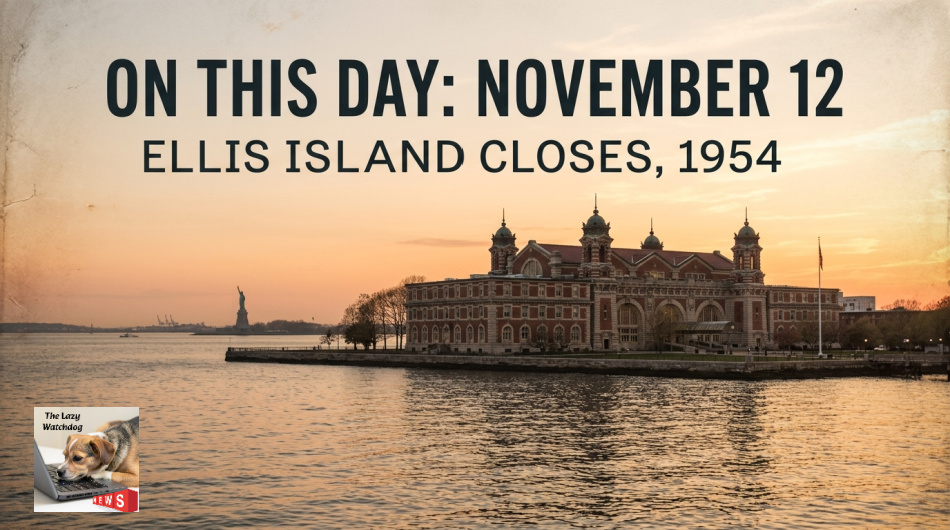
On November 12, 1954, America’s historic immigration gateway, Ellis Island, officially ceased operations in New York Harbor. Since opening its doors in 1892, the small island station processed more than 12 million individuals seeking safety and opportunity. Today, it stands as an iconic monument to American heritage, with nearly 40% of the U.S. population tracing their lineage directly back to this port of entry.
🌉 1936: The San Francisco-Oakland Bay Bridge Formally Opens
On November 12, 1936, the San Francisco-Oakland Bay Bridge officially welcomed its very first commuters. To mark the grand event, President Franklin D. Roosevelt pressed a golden telegraph key directly from the White House to signal the green light for traffic. The massive infrastructure project opened months ahead of its neighbor, the Golden Gate Bridge, and served as a powerful economic symbol of American engineering persistence during the Great Depression.
🏈 1892: Pudge Heffelfinger Signed to First Professional Football Contract
On November 12, 1892, athletic history changed when guard William “Pudge” Heffelfinger accepted a secret cash bonus of $500 from the Allegheny Athletic Association. By being openly compensated to take the field against rival teams, Heffelfinger officially became the world’s very first professional football player, shifting sports culture away from amateur clubs and setting up the foundations for modern gridiron leagues.
🪖 1969: Investigative Journalist Seymour Hersh Breaks the My Lai Story
On November 12, 1969, independent investigative reporter Seymour Hersh published a searing expose detailing the military cover-up of the My Lai Massacre. The shocking disclosures concerning military actions in Vietnam stunned the home front, prompting massive public outcries and fundamentally turning national public sentiment against continued American military involvement in Southeast Asia.
🚀 1981: Space Shuttle Columbia Proves Reusability on STS-2
On November 12, 1981, NASA launched the Space Shuttle Columbia into low Earth orbit for the second time during the STS-2 mission. This historic liftoff marked the first time humanity had ever successfully launched a reusable manned spacecraft back into space. The flight successfully validated the core architecture of the space shuttle fleet, proving that a single spacecraft could operate reliably across multiple voyages.